
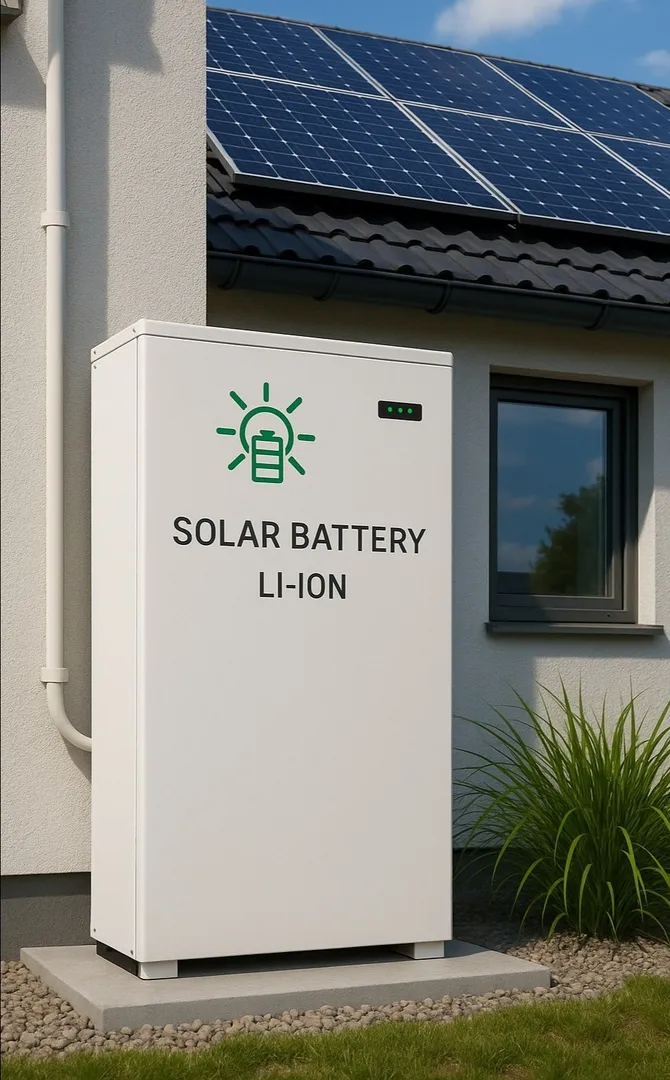
Battery technology has become an essential part of modern solar energy systems. Among the available options, the Li-Ion solar battery has emerged as one of the most widely adopted solutions due to its efficiency, compact design, and long operational life.
Whether for homes, commercial buildings, or industrial facilities in Nashik, understanding lithium-ion battery technology helps buyers make informed renewable energy decisions.
What Is a Li-Ion Solar Battery?
A lithium-ion solar battery stores excess electricity generated by solar panels for later use.
Instead of wasting surplus daytime energy, the battery allows it to be used:
- At night
- During cloudy weather
- During grid failures
- During peak electricity demand
This improves the overall utilization of solar-generated electricity.
Advantages of Lithium-Ion Batteries
Several characteristics make lithium-ion batteries popular for solar installations.
These include:
- High energy efficiency
- Faster charging
- Compact size
- Lightweight construction
- Long cycle life
- Low maintenance requirements
- Better depth of discharge
These advantages contribute to reliable long-term performance.
Common Applications
Li-ion batteries are widely used across different sectors.
Typical applications include:
- Residential rooftop solar systems
- Commercial offices
- Industrial facilities
- Hospitals
- Educational institutions
- Hotels
- EV charging stations
They are also increasingly used in hybrid solar systems with battery backup.
Important Buying Considerations
Before selecting a battery, evaluate:
- Storage capacity
- Battery chemistry
- Warranty
- Charging efficiency
- Safety certifications
- Expandability
- Operating temperature range
Choosing the correct battery capacity ensures reliable performance without unnecessary investment.
Safety Features
Modern lithium-ion batteries include several built-in protection mechanisms.
These often include:
- Overcharge protection
- Over-discharge protection
- Temperature monitoring
- Short-circuit protection
- Battery management systems
These features improve both safety and battery lifespan.
Maintenance Tips
Although lithium-ion batteries require relatively little maintenance, good practices help maximize performance.
Recommended maintenance includes:
- Keeping batteries within recommended temperature ranges
- Monitoring charging cycles
- Performing regular system inspections
- Updating monitoring software where applicable
Routine professional inspections also help identify potential issues early.
Growing Demand
As rooftop solar adoption increases across Nashik and Maharashtra, lithium-ion batteries are becoming a preferred storage option for residential, commercial, and industrial projects. Their high efficiency and compact design make them suitable for properties with varying energy requirements.
Companies including E-Solution Renewable assist customers in selecting battery systems based on electricity consumption, backup requirements, and future energy expansion plans.
A Reliable Energy Storage Option
Li-ion solar batteries continue to play an important role in modern renewable energy systems. Their ability to efficiently store and deliver electricity makes them a practical choice for users seeking greater energy independence and improved solar utilization.
Selecting the right battery involves evaluating capacity, quality, safety, and compatibility with the overall solar system to achieve dependable long-term performance.
Keywords


