
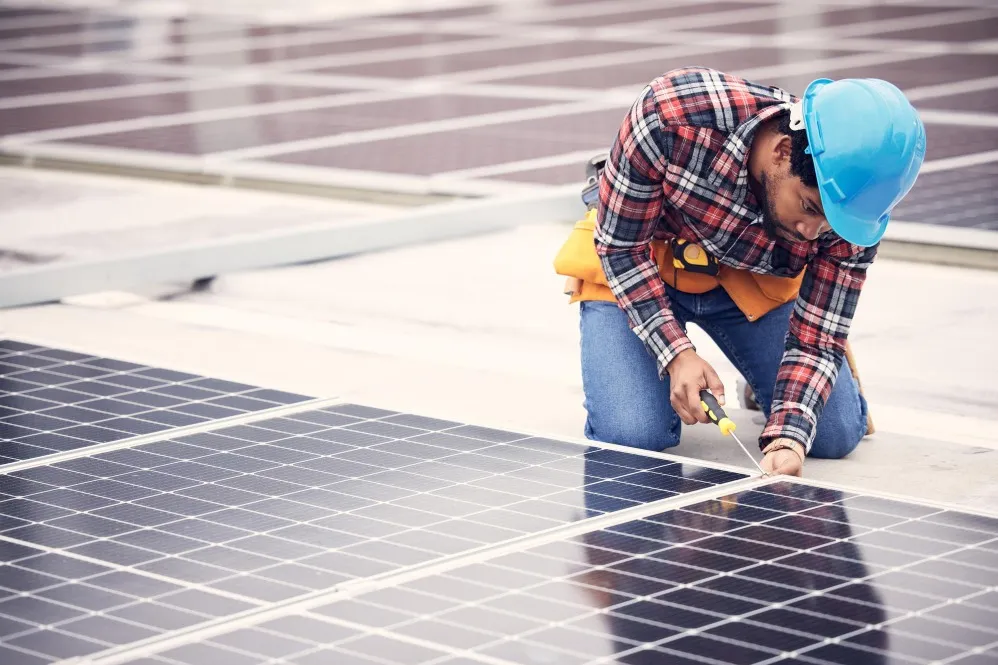
Solar panels installation can help you reduce electricity costs with a practical long-term solution.
If your monthly electricity bills continue to rise, it may be the right time to explore renewable energy. Many homeowners and property owners are considering solar power because it offers a practical way to generate electricity while making better use of available rooftop space. A properly planned installation focuses on your property's energy requirements rather than simply installing panels.
Why property owners consider solar power
For independent homes, commercial buildings, and residential societies where electricity demand continues to grow. Air conditioners, water pumps, kitchen appliances, and work-from-home setups can significantly increase monthly power consumption.
Solar energy provides an opportunity to offset a portion of this usage by producing electricity during daylight hours. Instead of viewing solar as a one-size-fits-all product, it should be planned according to available roof space, expected energy consumption, structural suitability, and future requirements.
Choosing Solar System Installation Service begins with understanding these practical factors before selecting equipment.
What does the installation process actually involve?
Many people assume solar installation simply means fixing panels on the roof. In reality, several important steps take place before the system starts generating power.
A site inspection helps evaluate roof orientation, shading, structural condition, and available installation area. Energy consumption is reviewed using previous electricity bills so that the recommended system capacity matches actual usage.
A common question many property owners ask is, 'How much rooftop area is required for solar panels installation?'
The answer depends on the system capacity, panel efficiency, and roof design. Every property is different, which is why an individual assessment is important before installation.
After planning, mounting structures are installed, panels are secured, electrical wiring is completed, inverter connections are made, and the system undergoes testing before commissioning.
This step-by-step process helps ensure the installation performs as intended.
A common misunderstanding about solar installations
One misconception is that installing more solar panels automatically produces better savings.
In reality, oversizing a system without understanding actual electricity consumption may not provide proportional benefits. Similarly, installing fewer panels than required may not meet your energy expectations.
Another misunderstanding is that every rooftop is suitable without inspection. Nearby buildings, water tanks, trees, or shadows can influence energy generation throughout the day.
Planning based on actual site conditions often delivers better long-term performance than simply choosing the largest available system.
How E-Solution Renewable handles solar projects
Every property has different requirements, so the process begins with understanding the customer's energy goals.
The team evaluates roof dimensions, electricity usage patterns, installation feasibility, and system capacity before recommending an appropriate solution. Depending on the requirement, customers can explore Solar Rooftop System, Off-Grid Solar Power System, or other renewable energy options that match residential or commercial applications.
For example, a homeowner experiencing consistently high daytime electricity consumption may require a different configuration than a commercial establishment operating throughout the day. Matching the installation with actual usage helps create a more practical solution.
The installation process also includes proper mounting, electrical integration, safety checks, and guidance on system operation after commissioning.
What to expect after installation
Most installations follow a planned sequence that begins with consultation and site assessment. Timelines typically vary depending on property size, permissions, equipment availability, and installation complexity.
After commissioning, the system begins generating electricity whenever adequate sunlight is available. Routine cleaning of panels and periodic inspection help maintain performance over time.
Solar systems are designed for long-term operation, but energy generation naturally varies with seasonal weather conditions and sunlight availability.
Understanding these expectations helps customers make informed decisions before investing in renewable energy.
Talk to E-Solution Renewable in Nashik
If you are exploring solar energy because rising electricity costs are affecting your monthly budget, it is natural to have questions before making a decision.
E-Solution Renewable offers Solar System Installation Service and Solar Rooftop System solutions designed around your property's energy requirements in Nashik.
Discuss your energy goals with the team and understand which solar solution may suit your home or business.
Contact E-Solution Renewable, Nashik to discuss your solar energy requirements.
Keywords


